
There was a version of Christian womanhood I was taught to admire that left almost no room for a woman whose body had collapsed.
She was productive.
She was available.
She was grateful.
She nourished everyone around her.
She bore children willingly.
She homeschooled.
She served.
She remained composed.
She carried Scripture beautifully.
She embodied Proverbs 31 as though the passage were a performance standard.
She absorbed Titus 2 womanhood as though maturity meant becoming increasingly useful, increasingly pleasant, increasingly sacrificial, increasingly able to disappear inside the needs of everyone else.
And if she suffered, she was expected to suffer faithfully.
Quietly.
Meekly.
Without becoming inconvenient.
Without becoming visibly undone.
Without appearing burdened enough to become burdensome.
When the Prairie Could Not Hold the Truth
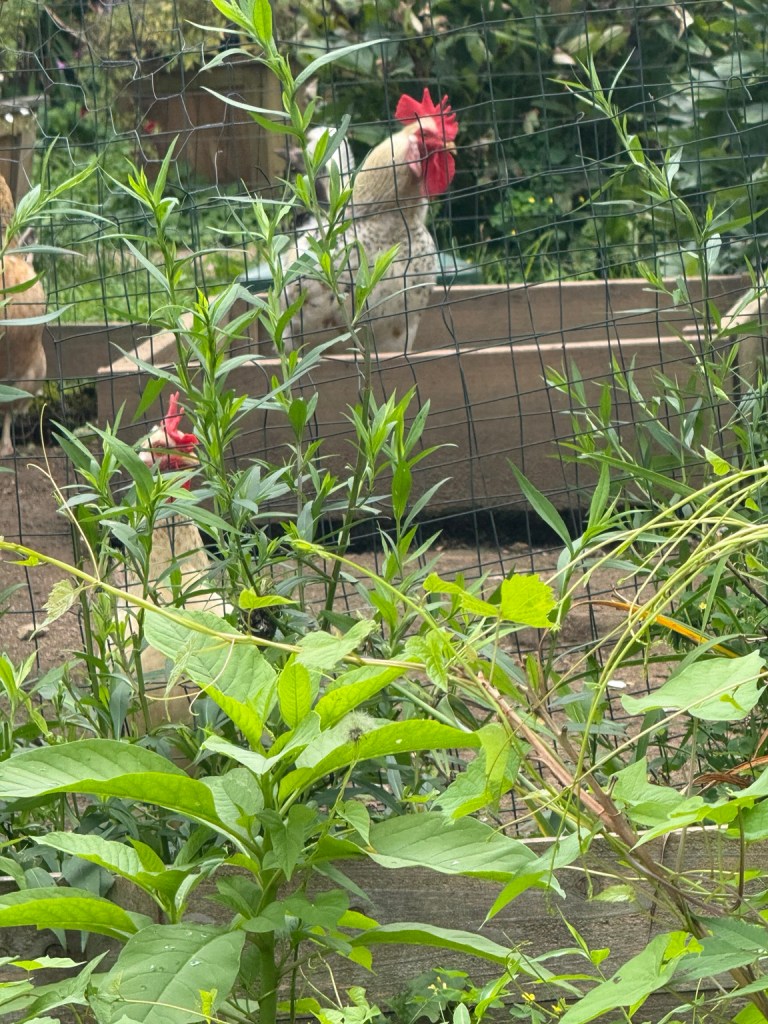
There was a whole aesthetic built around Christian womanhood that could look like refuge from the outside.
Nurture.
Abundance.
Home.
Motherhood.
Children gathered close.
Animals in the yard.
Flowers blooming beside the porch.
Meals prepared with care.
A life ordered around family, faithfulness, and belonging.
It could look pastoral.
It could look safe.
It could look like the kind of place where a vulnerable woman would finally be held.
And perhaps some of the care inside that world was real.
I do not need to say that every expression of tenderness was false.
Some of it may have been genuine.
Some of it may have felt deeply genuine.
That is part of why the rupture mattered.
Because what happens when Christian womanhood is beautifully staged as nurture, abundance, home, motherhood, animals, gardens, and belonging—
and the harmed woman discovers that belonging is conditional when her truth becomes costly?
That is where the aesthetic breaks open.
Because nurture that disappears when truth arrives was never rooted deeply enough.
The roots did not go as deep as the aesthetic testified.
They did not go as deep as the trust testified.
Nor as deep as the communal, familial, Jesus-specific language the relationship was clothed inside.
That language mattered.
It created the sense of kinship.
Of spiritual safety.
Of shared belonging.
Of something more enduring than ordinary friendship.
The language had promised family.
The aesthetic had promised refuge.
The closeness had promised safety.
And perhaps some of that care was real.
But when truth became costly, the depth of the relationship was revealed by what it could actually carry.
The flowers may have been real.
The animals may have been real.
The hospitality may have been real.
The tenderness may even have been real.
But refuge is revealed by what remains when the vulnerable person tells the truth.
Belonging that requires silence is not refuge.
Nurture that cannot survive costly witness cannot become sanctuary.
And a system can surround itself with every symbol of gentleness while still leaving the wounded woman alone when tending her would require something from the people who built it.
The roots did not hold when the vulnerable woman needed truth to be welcomed alongside her.
That formation became catastrophic for me.
When the Body Could No Longer Perform
Long before I understood what was happening, there had already been an existential rupture in my body.
An ectopic pregnancy collided with earlier trauma and opened something far deeper than grief alone.
My body did not experience it as a single loss that could simply be mourned and integrated.
It struck identity itself.
I entered a years-long collapse.
And instead of being surrounded by a community that understood what collapse does to a vulnerable nervous system, I was living inside a religious environment where womanhood itself had become measurable.
I was shunned for not homeschooling.
I was surrounded by Quiverfull assumptions about reproduction and faithfulness.
I was not producing more children.
My body was already carrying something it could barely survive, and the surrounding system had language for obedience, fruitfulness, submission, family, motherhood, and biblical womanhood—
but almost none for a woman whose body had reached its limit—
because her limits had been crossed long before she had language for them, long before development had given her the chance to know where she ended and others began.
My limits were crossed before I could name them.
I learned to override myself before I learned to belong to myself.
Then adulthood demanded more capacity from a body whose boundaries had already been breached.
Eventually I left that church.
But I did not leave the formation behind.
I entered another fundamentalist church.
One summer, I went to the pastor’s home for a women’s Bible study.
We sat together in a circle.
At some point, something inside me broke open.
I ran from the circle weeping and hid in the bathroom.
The women leading the study knew I had left in distress.
No one came after me.
No one checked on me afterward.
The vulnerable woman had become visible—
and the community kept going.
That moment did not create the collapse.
But it revealed the formation.
There was room for Bible study.
There was room for women’s ministry.
There was room for doctrine.
There was room for the performance of Christian fellowship.
There was not room for the woman crying alone in the bathroom.
And the collapse deepened.
Years followed in which spiritual starvation and erasure became almost impossible to distinguish from the rest of the devastation.
Church-sanctioned harm.
Exile.
Spiritual homelessness.
The collapse of relational worlds.
The loss of belonging.
A nervous system living under conditions it could not escape.
And still, somewhere underneath all of it, the old formation remained:
A faithful Christian woman should be able to do more than this.
She should be able to feed people.
She should be able to keep house.
She should be able to host.
She should be able to study Scripture.
She should be able to pray beautifully.
She should be able to mother without collapse.
She should be able to make something nourishing from whatever she has been given.
She should be able to rise early and work with willing hands.
She should not need so much.
She should certainly not be starving.
So when collapse took away my capacity to feed myself reliably, starvation became more than a physical problem.
It entered an already existing spiritual architecture.
A woman who had been formed to nourish everyone else could no longer reliably nourish herself.
A woman taught to measure faithfulness through capacity had lost capacity.
A woman trained to interpret limitation as failure was living inside profound limitation.
And then came the cruelest layer:
the body could collapse,
and the formation could use the collapse as evidence against the woman.
That is the double bind.
The system contributes to the conditions that overwhelm the vulnerable woman.
Then the visible consequences of overwhelm become evidence that she is failing to embody the womanhood the system prescribed.
She is harmed.
She collapses.
Then she is measured against the standard she can no longer perform.
This is one of the ways spiritual starvation happens.
Not simply through the absence of food.
Through the slow destruction of permission to receive.
Through a woman becoming so thoroughly organized around carrying, serving, producing, explaining, enduring, remaining silent, remaining meek, and remaining acceptable that her own hunger becomes nearly illegible.
And when the nervous system finally refuses the arrangement, she may experience the refusal as personal failure.
I did.
For years.
The formation felt endless.
Real Jesus Raises the Real Living Woman
The nightmare did not end because I finally became better at being the woman the system required.
It ended in resurrection.
And resurrection did something completely different.
It did not produce a more efficient version of the old woman.
It did not turn me into the flawless Christian homemaker I had failed to become.
It did not restore me so that I could finally prove everyone wrong by performing the ideal beautifully.
Real Jesus returned the living essence to center.
He restored communion.
He began teaching the living woman that she could receive.
That her body was not an inconvenience to overcome.
That hunger did not make her morally deficient.
That limitation was not evidence against her faith.
That feeding herself did not have to be earned by productivity.
And that resurrection itself would not be measured by how convincingly she could perform wellness.
The Echoes Do Not Negate Resurrection
Today, the old CPTSD echoes are loud.
Roots from that lifelong formation are rising.
I am frustrated by them.
I would rather be farther along than this.
I would rather embodiment mean simply waking up and inhabiting my life without having to notice what an old nervous system still remembers.
But that is not where I am today.
And I do not want to turn resurrection into a glossy story where the evidence of Jesus is that nothing difficult ever rises again—
or where the past that made bodily resurrection necessary is somehow wiped from all cellular memory.
The cells can be made new.
The living essence can be returned to center.
The spirit can be restored to communion.
And all three can still remember the ash from which they grow.
Some days, the ash tastes almost sweet because the blooms are what I notice first.
Other days, the ash tastes bitter because it was bitter.
A body can no longer be covered by it.
The living essence can no longer be buried beneath it.
But residue can still rise.
And sometimes remembrance arrives as a symptom before I have chosen to remember anything at all.
That does not mean the fire has returned.
Echoes do not negate resurrection.
They testify to the fire I rose from—
a fire that no longer consumes me,
but can still hurt.
He stays with the living woman while old roots rise.
And resurrection gives me another knowing now:
He will tend these too.
He does not leave old roots hidden simply because the fire is over.
If they are rising now, I can trust that they are rising into the Light because they are ready for His gentle care.
Not because resurrection failed.
Not because I have been returned to the ash.
But because what once had to remain buried no longer has to live in darkness.
Jesus does not expose a root in order to shame the body that carried it.
He brings it into the Light so He can tend what is finally ready to be tended.
And when the time is right,
prune what no longer belongs in the Garden.
There was a time I would have surrendered to the starvation narrative when symptoms rose.
The symptoms would come, and feeding myself could disappear with me.
The Living Woman Eats
But I am home with Jesus now.
And He feeds me.
Sometimes through communion that has no words.
Sometimes through sunlight.
Sometimes through the ordinary wisdom of staying in my body long enough to make lunch.

And sometimes, quite literally, through salad.
So today I filled a jar.
Greens.
Chickpeas.
Corn.
Something nourishing gathered into glass while my body carried more than I wanted it to carry.
That sounds almost absurdly small beside everything I have just written.
Maybe that is why it matters.
I did not make it because a good Christian woman should prepare wholesome food.
I did not make it because recovery should look attractive.
I did not make it to prove that I am functional.
I made it because I was hungry.
And I chose to eat.
This is not proof that I am healed.
It is not a Christian lifestyle moment dressed up as resurrection.
It is quieter than that.
I am frustrated that the echoes are here.
And I am eating anyway.
I can be disappointed that this still hurts
and grateful that it no longer consumes me.
Both are true.
Perhaps this is one of the deepest things Birdy Anne can offer women who were formed inside prairie-perfect Christianity, Quiverfull expectations, Titus 2 mentoring, Proverbs 31 performance, and religious systems that confused female faithfulness with endless capacity—while also requiring silence, meekness, and the presumption of being unburdened so she would never become burdensome to the very system erasing her.
You do not have to demonstrate resurrection by becoming flawless.
You do not have to erase the evidence that your body survived something.
You do not have to turn recovery into another performance of Christian womanhood.
You do not have to nourish everyone before you are allowed to eat.
You do not have to become useful enough to prove that Jesus restored you.
Resurrection and lifelong CPTSD can both be true.
The echoes can hurt without becoming the whole reality.
The body can remember without being buried beneath what it remembers.
Resurrection does not produce a prairie-perfect woman.
It produces a living woman.
And today, His tending looked a little like a jar of salad sitting on my kitchen counter that I chose to eat.
The system exiled her.
Real Jesus welcomes her into the Garden.
The system measured what she could give.
Real Jesus feeds her.
The system required her to disappear.
Real Jesus lets her live.
And she chooses to live it with Him because He is trustworthy.
He always feeds her what she needs.
At her sickest, He fed her enough to keep her alive.
Now, He feeds her until she is full.
And the echoes quiet beneath what He gives.

